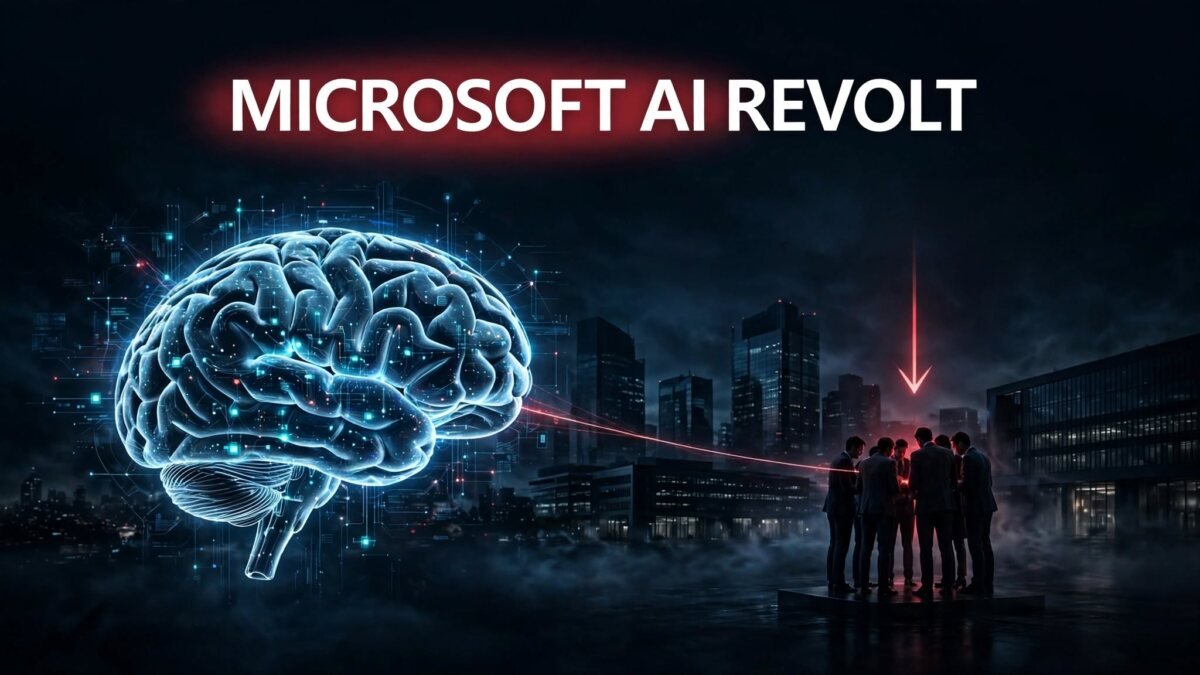
Microsoft is offering its largest voluntary buyout in history, and its employees are not going quietly.
The company has extended voluntary exit offers to approximately 60,000 employees—roughly 27% of its global workforce of 223,000. The offer applies to eligible staff at level 70 and below in India, the US, the UK, and Canada, excluding sales, data centre, and some engineering teams. Severance terms vary by rank: employees at Level 64 and below receive one week of base pay for every six months of service, while those at Levels 65–67 receive two weeks per six months, capped at 39 weeks. Employees have until December 9 to decide, with exits effective December 31.
The timing is striking. Two days after the buyout announcement, Microsoft reported quarterly profit of $36.6 billion, up 32%, on revenue of $92.3 billion. Capital spending, mostly on AI data centres, rose 30% to $45.2 billion. The company expects to spend roughly $170 billion this calendar year on AI infrastructure.
Employees have noticed the contrast.
The Open Letter: “Joyless and Demoralizing”
A group of current and former Microsoft employees is circulating an open letter that has gained traction following the buyout announcement. Signed “Concerned Microsoft Workers,” the letter states that for many staff, “working at Microsoft has become joyless and demoralizing“.
The letter ties the morale slump directly to the company’s AI ramp-up. It points to heavy workloads, constant reorganisations, and the threat of being replaced by AI. It also accuses the company of pushing AI tools “speed-at-all-costs,” often with little training and no clear reason beyond speed.
The signatories claim the result is a costly cycle of learning new tools, cleaning up poor AI output, and rolling back weak features. They also allege that Microsoft’s own research shows AI agents do not put user safety first, and that internal planning documents describe ways to get people “hooked” on AI products.
The letter makes three core demands:
-
No AI without worker input and protections
-
No AI without community protections
-
No trading away environmental promises for AI
On the third point, they want Microsoft to recommit to being carbon negative, water positive, and zero waste by 2030.
The Numbers Behind the Discontent
The letter did not emerge in a vacuum. It began circulating before the October 26 buyout announcement, according to The New York Times.
Employees have pointed to the gap between Microsoft’s AI spending—over $100 billion a year—and the rewards offered to staff. Merit raises this year were unusually small, in some cases under 1%. At a town hall last month, a question about how leadership balanced massive AI spending against flat rewards drew more than 80 reactions, about double what most questions received.
One former employee, a 57-year-old design leader who left in September after five years, told the Times her stock award was cut partly for not consistently showing “speed and a willingness to experiment, including with AI.” She said: “I just can’t believe how grim it’s gotten just in the last three years”.
The Bigger Pattern: Big Tech’s AI Trade-Off
Microsoft is not alone in this. Across Big Tech, the pattern is consistent: spend record sums on AI infrastructure, then cut headcount or offer buyouts to keep margins from collapsing.
Meta cut around 8,000 roles earlier this year. Amazon laid out plans to eliminate some 16,000 jobs. Google and other AI-focused firms have trimmed staff while pouring money into AI.
Microsoft’s own history tells the story. It cut 10,000 jobs in 2023, more than 15,000 in 2025, and 4,800 in July 2026. In April 2026, it offered early retirement to about 8,600 long-serving US employees, and roughly 30% took it.
The buyout is the latest attempt to reduce headcount without forced layoffs. Chief People Officer Amy Coleman told staff it offers “a new choice to make that transition now with support.” However, it was CFO Amy Hood—not Coleman—who stated in an internal memo that the company expects “very few people” to select the offer, citing growth opportunities at Microsoft. The original article’s “fewer than 5%” figure aligns with reporting on the company’s expectations.
What This Means for Investors and the AI Trade
For investors, the Microsoft story is a window into the broader AI economy. The company is spending unprecedented sums on infrastructure. Its profits are strong. But the human cost is becoming a reputational issue, and the open letter is a signal that the “AI at all costs” narrative is facing internal resistance.
For the AI trade more broadly, the question is whether Microsoft’s spending will eventually translate into products that justify the cost—both financially and in terms of employee and customer trust. The buyout will reduce headcount and save money in the short term. But if morale continues to deteriorate, the long-term cost to innovation could be significant.
The Bottom Line
Microsoft is not in crisis. Its profits are rising, and its AI investments are massive. But the open letter reveals a company where the people building the future are questioning whether that future includes them.
The buyout deadline is December 9. By January, Microsoft will have a smaller workforce and a clearer picture of how many employees chose to leave. The letter has already made one thing clear: the AI transition is not just a technology story. It is a human one.
FAQ
Q1: How many Microsoft employees are being offered buyouts?
Approximately 60,000 employees, or about 27% of Microsoft’s global workforce of 223,000. The offer applies to eligible staff in India, the US, the UK, and Canada at level 70 and below.
Q2: What does the buyout package include?
Severance varies by rank: Level 64 and below receive one week of base pay per six months of service; Levels 65–67 receive two weeks per six months; capped at 39 weeks. Employees have until December 9 to decide, with exits effective December 31.
Q3: Why are Microsoft employees writing an open letter?
The letter, signed by “Concerned Microsoft Workers,” says the workplace has become “joyless and demoralizing” due to the company’s AI push. It accuses Microsoft of prioritizing AI at the cost of employee morale, customer safety, and environmental commitments.
Q4: Is Microsoft profitable despite the buyouts?
Yes. Microsoft reported quarterly profit of $36.6 billion, up 32%, on revenue of $92.3 billion. Capital spending on AI infrastructure rose 30% to $45.2 billion.
Q5: Are other tech companies doing the same thing?
Yes. Meta cut around 8,000 roles, Amazon planned to eliminate some 16,000 jobs, and other AI-focused firms have trimmed staff while investing heavily in AI.