8. Image SEO Title:
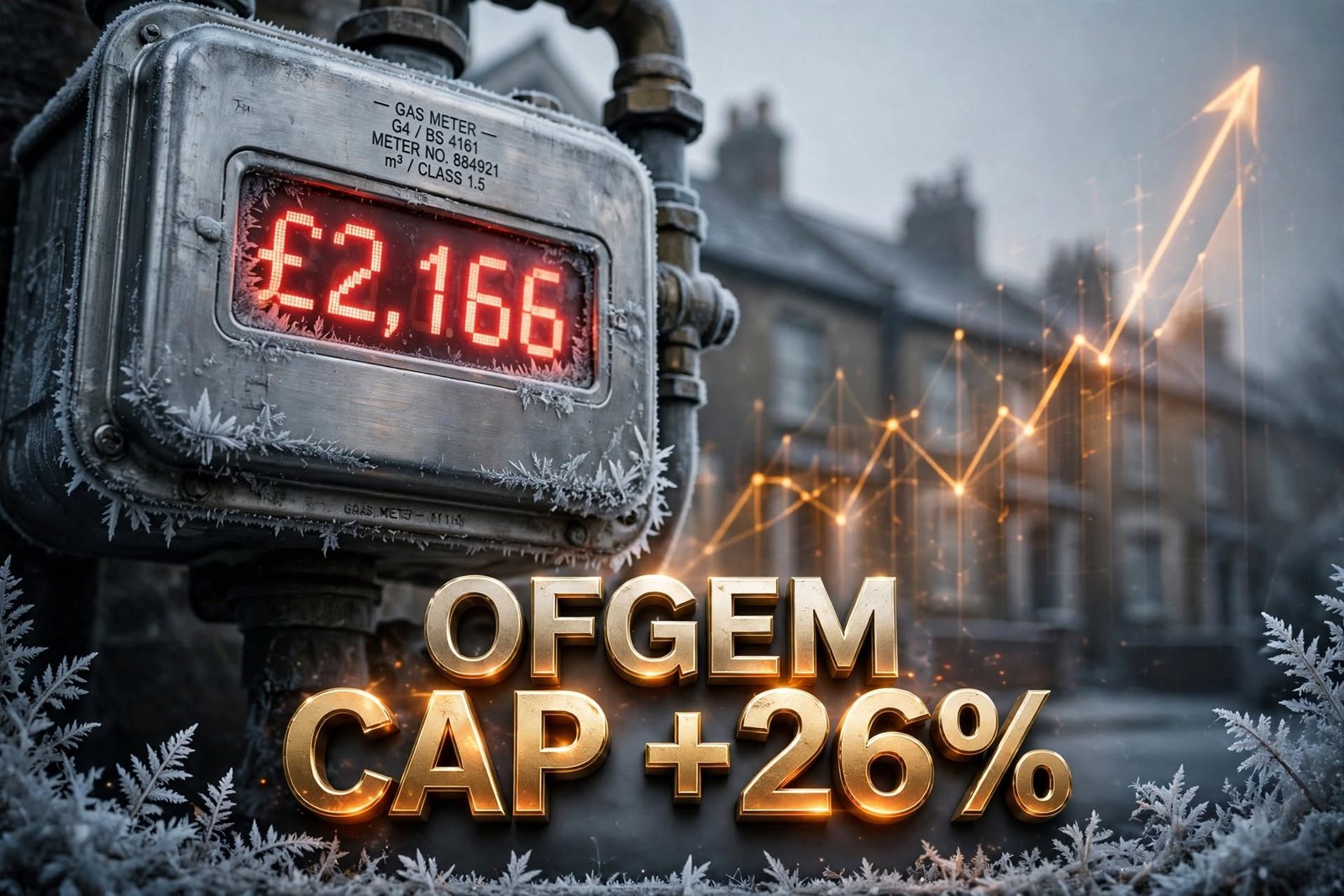
The Ofgem price cap will rise 26% from January 1, 2027, pushing the typical annual dual-fuel bill for households in England, Scotland, and Wales to £2,166—an increase of £443 from the current £1,723. The regulator announced the decision on November 25, attributing the surge to sustained wholesale gas prices driven by the ongoing Middle East conflict. Approximately 20 million households on standard variable tariffs will feel the impact as winter demand peaks.
What the Ofgem Price Cap Actually Limits
The Ofgem price cap does not cap a household’s total bill. It limits the unit rates and standing charges that suppliers can charge on standard variable and default tariffs. Consumption determines the final amount. Under the new cap, electricity unit rates rise to 32.69p per kWh from 26.32p, while gas jumps to 10.96p per kWh from 7.97p—a 33% increase for gas and 19% for electricity. Standing charges remain largely unchanged, meaning nearly all of the increase flows through usage-based pricing.
This structure disproportionately affects larger households and those with higher winter heating needs. The cap is reviewed quarterly, with the next announcement scheduled for February 23, 2027, covering April to June.
| Period | Typical Annual Bill (Direct Debit) | Change |
|---|---|---|
| April–June 2026 | £1,477 | −7% |
| July–September 2026 | £1,663 | +13% |
| October–December 2026 | £1,723 | +4% |
| January–March 2027 | £2,166 | +26% |
Source: Ofgem, via HETAS
Why the Ofgem Price Cap Is Rising Now
The regulator pointed directly to geopolitical disruption. Wholesale gas prices remain elevated due to the conflict in the Middle East, which has constrained global LNG supply and kept international benchmarks high. Gas prices rose faster than electricity precisely because the UK remains heavily dependent on gas for heating and power generation.
The timing compounds the pain. January and February are peak consumption months. A household that used £150 of energy in October may face a bill exceeding £220 for the same usage in January, even before accounting for colder weather driving higher consumption.
Government support is limited. A £100 Household Energy Payment will be distributed to approximately 24 million households in council tax bands A through D in England, with similar schemes planned in Scotland and Wales. That £100 offsets less than a quarter of the £443 increase. For households on prepayment meters or standard credit, the hit is proportionally worse.
The Inflation Knock-On for Bank of England Policy
The Ofgem price cap rise feeds directly into UK inflation data. UK CPI already hit 3.6% in October, driven largely by energy and motor fuel costs. The Bank of England raised its key rate to 4% in November, citing energy-driven inflation pressures and projecting CPI could approach 5% by mid-2027.
Core inflation, however, remained stable at 2.8%, and services inflation held at 3.7%. This suggests the energy shock has not yet broadened into wages and broader prices. PwC economist Adam Deasy noted that “the energy shock is feeding meaningfully through into wider prices and wages” remains limited, but warned second-order effects could still materialize. For mortgage holders tracking Personal Finance on BsMaurya, the implication is that further rate hikes remain possible, though the bar is higher than it appeared a month ago.
What Households Can Do Before January
Fixed tariffs currently offer partial insulation. EDF Energy is pricing a two-year fixed tariff at £1,924 annually based on Ofgem’s typical consumption—roughly £242 below the incoming January cap. Locking in before the cap takes effect converts uncertainty into a known cost.
Households should also verify their payment method. Direct Debit typically saves around £160 annually compared to standard credit. Checking eligibility for the Warm Home Discount and the new £100 payment is equally important, as is a basic energy audit: lowering the thermostat by one degree, sealing draughts, and reducing hot water temperatures each deliver measurable savings against a cap that rewards conservation.
BS Maurya Research Verdict
The Ofgem price cap at £2,166 is a near-term certainty, not a forecast. The 26% increase is locked in through March 2027, and the £100 government payment is a bandage on a gushing wound. For UK households, the rational response is to fix energy costs where possible, claim every available discount, and budget for the full £443 hit rather than the subsidized £343. For investors, energy suppliers with hedged positions and fixed-tariff products stand to gain market share as consumers flee variable tariffs. The broader UK inflation trajectory hinges on whether this energy shock stays contained—and for now, it is.
Frequently Asked Questions
1. How much is the Ofgem price cap rising?
The cap rises 26% from January 1, 2027, taking a typical dual-fuel Direct Debit bill from £1,723 to £2,166 annually—an increase of £443.
2. Does the price cap limit my total energy bill?
No. The cap limits unit rates and standing charges, not total spend. A household using more energy than the “typical” level will pay more than £2,166.
3. Why are gas prices rising faster than electricity?
Gas unit rates increase 33% versus 19% for electricity because the UK remains heavily dependent on gas for heating, and wholesale gas prices have been pushed higher by Middle East supply disruptions.
4. Is there any government help with the increase?
A £100 Household Energy Payment will go to approximately 24 million households in England in council tax bands A-D, with devolved administrations running similar schemes. It offsets less than a quarter of the increase.
5. Will the price cap fall later in 2027?
EDF forecasts the cap could begin falling from July 2027 if wholesale prices ease. The next cap announcement, covering April to June, is scheduled for February 23, 2027.


