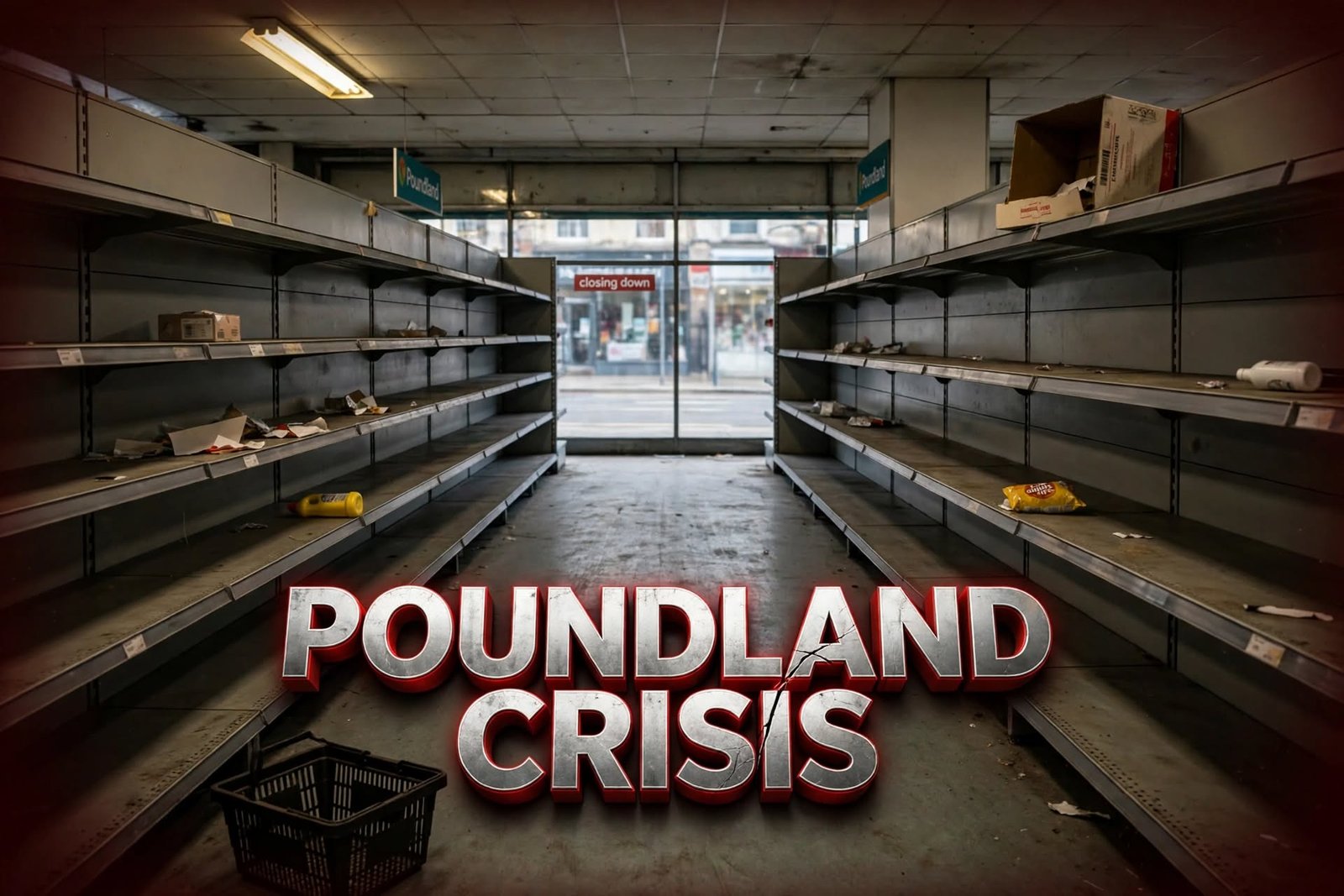
The Poundland Gordon Brothers standoff is entering its final hours, with a rescue deadline set to expire at midnight on Wednesday and roughly 11,000 jobs hanging in the balance across 600 UK stores. The discount chain’s American owner, which acquired Poundland for £1 in June 2025, has been accused by MPs of deliberately starving the business of cash while rejecting viable takeover bids—allegations Gordon Brothers denies. What was pitched as a rescue eighteen months ago now looks, to critics, like a slow-motion liquidation engineered by a firm that profits from wreckage.
How a £1 Rescue Became a High Street Crisis
Gordon Brothers is not a retailer. It is a Boston-based restructuring specialist that has built a century-old business on buying distressed assets and selling them off piece by piece. When it took Poundland off Pepco’s hands for a nominal £1, the deal was framed as a lifeline. But the structure of the transaction told a different story: Gordon Brothers simultaneously became Poundland’s owner and its senior secured lender, inheriting a £30 million loan and opening a credit facility of up to £95 million.
That dual role is the crux of the crisis. As secured lender, Gordon Brothers controls access to cash. As owner, it controls the sale process. Critics argue those two interests are irreconcilable. In late October, Poundland management found itself locked out of roughly £50 million in its own bank accounts, unable to restock shelves ahead of the crucial Christmas trading period. Managing director Barry Williams told staff plainly: “Our stock is depleting and gaps are appearing”.
The political reaction was swift and furious. Business Secretary Jonathan Reynolds summoned Gordon Brothers to explain itself. Prime Minister Andy Burnham, whose constituency hosts one of Poundland’s largest distribution centres, urged the firm to “sit down with us and let’s find” a solution. Liam Byrne, chair of Parliament’s Business and Trade Committee, described Gordon Brothers’ behaviour as “much like a wolf on Wall Street, on the British High Street”.
The Bids That Were Rejected—and the One That Might Not Survive
Poundland’s management had named Martin Property Group, a Northern Irish property firm, as its preferred bidder. That bid was rejected by Gordon Brothers over a dispute about who would repay the £30 million shareholder loan upfront. Gordon Brothers said the offer was unacceptable because Martin Property Group was unwilling to make the repayment immediately.
A second bidder, London-based Xyra Group, offered to pay off £12.5 million of the loan immediately, but doubts emerged about whether it had the funding to complete a takeover. Xyra was given until Friday to provide proof of funds but reportedly deferred until Tuesday—leaving almost no time before the deadline.
In the final days, two new suitors emerged: German private equity firm Zachert Private Equity and a Dubai-based investor linked to wholesale group Premier Quality Foods. Whether either can move from indicative interest to a binding, funded offer before Wednesday night is uncertain. Restructuring specialists have already been instructed to draw up liquidation plans for hundreds of stores, a contingency that signals the government and Poundland’s board are preparing for the worst.
The Numbers Behind the Poundland Gordon Brothers Standoff
| Metric | Detail |
|---|---|
| Stores at Risk | ~600 UK locations |
| Jobs at Risk | ~11,000 direct; up to 30,000 including suppliers |
| Acquisition Price | £1 (June 2025) |
| Frozen Cash (Peak) | ~£50 million |
| Loan Inherited | £30 million secured |
| Sales Shortfall | 20–25% below expectations (~£1m/day) |
| Administration Deadline | November 25, 2026 |
Source: Retail Gazette, BBC, Cambridge Independent
The Central Contradiction: Profitable but Strangled
Perhaps the most damning detail in the Poundland Gordon Brothers saga is that Poundland was not failing on its own merits. Internal figures show the chain swung from a £68.1 million EBITDA loss to an £18.1 million profit in the year to September 2026, before its access to funding was restricted. Like-for-like sales were up 11.4% in the period covering Halloween, £1.5 million ahead of budget.
Williams, the managing director, has been explicit that the funding squeeze—not consumer demand or operational failure—is what pushed the business to the brink. “Our sales line, not so long ago buoyant and exceeding expectations, has now moved to underperformance versus our plan,” he told staff. “The momentum we created that we fought hard to build, is starting to leave us”.
Gordon Brothers disputes this framing, arguing Poundland “remains challenged and vulnerable” and is “still not cash generative at a sustainable level”. But the timing is difficult to defend: restricting cash access weeks before Christmas, when retail cash flow is most critical, created a self-fulfilling prophecy. If shelves are empty, sales fall. If sales fall, the business looks unviable. If the business looks unviable, a solvent sale becomes harder to justify.
What Happens If No Deal Is Struck
If the deadline passes without a funded rescue, Poundland’s directors will appoint administrators from AlixPartners. The most likely outcome is a break-up: Tesco has held talks to acquire up to 150 stores, while Iceland, Lidl, and Poundstretcher’s owner have expressed interest in parts of the estate. Buyers are currently interested in only about half the store network, meaning roughly 6,000 employees would not be re-employed even in a piecemeal sale.
For suppliers, the damage extends far beyond Poundland’s payroll. Founder Steve Smith warned that two to three thousand suppliers who work solely for Poundland could go under, pushing total job losses as high as 30,000. One Bradford-based confectionery supplier told the BBC a collapse would cost it “a few million” in lost sales.
BS Maurya Research Verdict
The Poundland Gordon Brothers crisis is a governance failure dressed up as a distressed-asset play, and small-business owners and retail investors should study it closely. The structure of the deal—owner as secured lender—created a conflict of interest that was always going to surface under pressure. Whether Gordon Brothers deliberately engineered the outcome or simply mismanaged the transition, the effect is the same: a profitable retailer with 11,000 employees is on the brink of administration while its owner faces accusations of profiting from the wreckage.
For UK high-street watchers, the lesson is that a £1 acquisition is never really £1. The buyer inherits obligations, loans, and liabilities that determine the real cost of control. For suppliers exposed to Poundland, the priority now is to assess credit exposure and prepare for the possibility that payments stop flowing. For policymakers, the case for reforming how secured lending interacts with insolvency in retail is urgent. If a business can be pushed into failure by the very party that stands to gain from its liquidation, the system is broken.
Frequently Asked Questions
1. What is the deadline for a Poundland rescue deal?
The current notice of intention to appoint administrators expires at midnight on Wednesday, November 25, 2026. If no funded deal is agreed by then, Poundland’s directors are expected to appoint AlixPartners as administrators.
2. Why did Gordon Brothers reject Martin Property Group’s bid?
The dispute centred on a £30 million shareholder loan that Gordon Brothers inherited when it bought Poundland for £1. Martin Property Group was unwilling to repay the loan upfront, and Gordon Brothers deemed the offer unacceptable. Poundland’s management had backed the Martin bid as its preferred option.
3. Is Poundland actually profitable?
Yes, according to internal figures. Poundland reported an £18.1 million profit in the year to September 2026, a recovery from a £68.1 million loss the previous year. Sales were growing before Gordon Brothers restricted access to cash, which left the chain unable to restock shelves.
4. Who is still trying to buy Poundland?
As of the final weekend before the deadline, bidders included Martin Property Group, Xyra Group, Zachert Private Equity (Germany), and an entity linked to Premier Quality Foods. Tesco, Lidl, Iceland, and Poundstretcher’s owner have expressed interest in acquiring individual stores or groups of stores rather than the whole business.
5. What happens to Poundland employees if the chain collapses?
If administrators are appointed, stores will likely be sold piecemeal. Buyers are interested in roughly half the 600 stores, meaning approximately 6,000 employees may not be transferred. TUPE regulations normally protect staff when a business is rescued as a going concern, but employees are unlikely to be protected if stores close entirely.