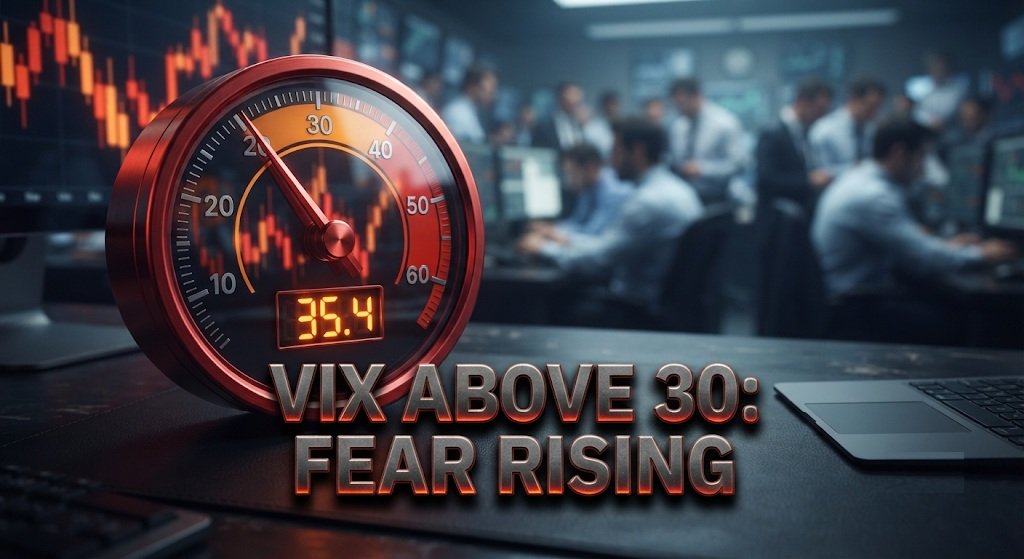
A VIX spike above 30 has officially moved from a background nuisance to a primary warning signal. The CBOE Volatility Index jumping decisively above the 30 level indicates that options markets are pricing in daily moves that would have seemed extreme during calmer periods. For context, the index often spends prolonged periods in the comfortable 14 to 18 range; crossing 30 represents a significant shift in market psychology.
What the VIX Spike Actually Measures
The VIX is not a price index—it is the market’s 30-day forward expectation of S&P 500 volatility, derived from S&P 500 index options pricing. A VIX above 30 means institutional hedgers are paying a premium for downside protection. When protection gets expensive, it usually precedes one of two outcomes: a sharp resolution of uncertainty, or a deeper, more prolonged market drawdown.
The distinction matters. A VIX spike driven by a single scheduled event (e.g., a Federal Reserve decision or an election) tends to mean-revert within weeks. A VIX spike driven by a structural repricing of macroeconomic themes (like persistent inflation or geopolitical shocks) historically lingers and often precedes further market adjustments.
What Is Driving Elevated Volatility
When the VIX spikes, it is rarely due to a single factor. Typically, multiple stressors converge to feed the fear gauge:
- Macroeconomic Uncertainty: Shifts in Federal Reserve policy expectations, sticky inflation data, or shifting interest rate trajectories can rapidly reprice risk assets.
- Sector-Specific Reassessments: After prolonged rallies in specific sectors (such as technology or AI), any disappointment in earnings guidance or capital expenditure returns can trigger rapid de-risking.
- Geopolitical Risks: Global tensions or supply chain disruptions introduce unpredictable variables that algorithms and institutional risk models immediately price in.
- Credit Market Signals: Widening credit spreads or difficulties in corporate debt markets often precede or accompany equity volatility, signaling tighter financial conditions.
The common thread is that these stressors hit the market simultaneously, forcing institutional investors to rebalance portfolios and retail investors to confront the reality of market cycles.
The VIX Spike in Historical Context
|
Metric
|
Current Context
|
Historical Context
|
|---|---|---|
|
VIX Level
|
Above 30
|
Indicates elevated fear; highest in recent months
|
|
Session Change
|
Sharp single-day increase
|
Reflects rapid repricing of risk
|
|
Long-Term Average
|
~19–20
|
Current level is significantly above the historical mean
|
|
Market Behavior
|
High correlation in sell-offs
|
Diversification benefits often diminish temporarily
|
The VIX has historically averaged around 19 over the long run. Above 30 is not a normal condition—it is a regime shift where daily 1% to 2% swings become routine and correlations across risk assets converge toward one. When everything sells off together, traditional diversification stops working, which is exactly what an elevated VIX implies.
For official context on how volatility interacts with monetary policy cycles, the Federal Reserve’s research portal is a useful reference.
How Retail Investors Should Respond to a VIX Above 30
The instinct to sell everything is understandable but often counterproductive. A more disciplined playbook includes:
- Do not buy volatility at the peak. VIX-tracking products like VXX and UVXY are structurally decaying instruments due to futures roll yield. Buying them after a spike is a common way retail investors lose money twice—once on the original drawdown, and again on the “volatility crush” as the VIX mean-reverts.
- Use fear as a signal, not a trigger. Elevated VIX levels have historically coincided with better forward 12-month returns for patient, long-term buyers. The opportunity is real, but timing it requires staged entry (dollar-cost averaging), not lump-sum betting.
- Check your actual hedges. If your portfolio has no downside protection and you are now anxious, the lesson is about strategic asset allocation, not short-term market timing. A small, permanent allocation to defensive sectors, bonds, or cash buffers beats scrambling for put options after the fact.
- Watch for VIX mean reversion below 25. A sustained drop back under 25 often signals that fear is resolving and risk appetite is returning—a more reliable all-clear signal than any single day of positive market returns.
BS Maurya Research Verdict
A VIX spike above 30 is a legitimate warning, not a standalone buy signal. It confirms that institutional investors are hedging aggressively against macroeconomic or sector-specific uncertainties. Historically, spikes driven by structural themes take longer to resolve than event-driven ones. However, panic selling into a fear index at 30+ is how retail investors convert temporary volatility into permanent loss. The disciplined response is to review portfolio concentration, ensure some downside protection exists, and prepare a staged buying plan for when the VIX begins to mean-revert. Fear is expensive; patience is not.
Frequently Asked Questions
1. What does a VIX above 30 mean? A VIX above 30 signals that options markets are pricing in elevated 30-day volatility for the S&P 500. Historically, this level indicates high institutional hedging demand and larger-than-normal daily market swings.
2. Is a VIX spike a buy signal? Not directly. While elevated VIX levels have historically coincided with better forward returns, spikes driven by structural macroeconomic unwinds can persist. Most disciplined investors wait for the VIX to show signs of mean reversion (e.g., dropping below 25) before aggressively adding risk.
3. Should I buy VXX or UVXY after a VIX spike? Generally, no. Volatility ETFs are structurally decaying instruments designed for very short-term trading by sophisticated investors. Buying them after a spike exposes retail investors to the “volatility crush,” which can erase gains even if the market remains choppy.
4. What typically drives a VIX spike? Spikes are usually driven by a combination of macroeconomic uncertainty (inflation, interest rates), geopolitical events, unexpected earnings misses from major market-cap companies, or sudden shifts in credit market conditions.
5. How can I protect my portfolio from high volatility? Practical steps include reviewing concentration in high-growth or tech names, maintaining a cash buffer, considering defensive sector allocations, and avoiding panic selling during elevated VIX readings. Strategic, permanent allocation beats reactive, emotional hedging.