Core PCE Inflation October 2026 just delivered the wrong kind of shock to Wall Street: the Federal Reserve’s preferred inflation gauge accelerated to 3.3% year-over-year, the hottest reading since November 2023 and a direct challenge to anyone betting on near-term rate cuts. The monthly core figure rose 0.3%, in line with consensus, but the annual print came in one-tenth above the 3.2% forecast, according to data released Wednesday by the Bureau of Economic Analysis. Headline PCE climbed to 3.8% annually, up from 3.6% in September. For equity investors already nursing losses in AI infrastructure names, the message is uncomfortable: the disinflation story that powered the 2026 rally is not dead, but it is stalling.
What the Core PCE Inflation October 2026 Report Actually Said
The headline number tells one story. The internals tell a more important one.
Core PCE, which strips out food and energy, rose 0.3% month-over-month for the second straight month. That is not a crisis-level print. But the year-over-year acceleration from 3.1% to 3.3% matters because it confirms that underlying price pressure is not fading at the pace the Fed needs. Personal income jumped 0.7% month-over-month, well above expectations, while real consumer spending came in flat. That combination—stronger incomes, stagnant real spending—suggests households are earning more but dedicating the incremental dollars to higher prices rather than additional consumption.
The services side remains the sticky problem. Energy costs have been the noisy variable, but core services inflation is what keeps the 2% target out of reach. The Fed has repeatedly said it needs to see sustained softening in core services before it can justify easing. October’s data did not provide that evidence.
Why 3.3% Is a Bigger Deal Than the Headline Suggests
A single tenth of a percentage point above consensus would normally be a non-event. This time it is not, for three reasons.
First, the trend is wrong. Core PCE has now accelerated on an annual basis for two consecutive reports. September’s 3.1% was already above target. October’s 3.3% moves further in the wrong direction. Markets can tolerate elevated inflation if it is falling. They are far less forgiving when it is rising again.
Second, the timing is brutal. The report landed two weeks before the Federal Reserve’s December policy meeting. Futures markets had been pricing a modest probability of a cut in early 2027. Those odds compressed further after the release. The Fed’s problem is that it cannot credibly ease into an economy where core inflation is re-accelerating while personal incomes are growing at 0.7% monthly.
Third, the number reinforces the narrative that has been hammering AI and semiconductor stocks. Higher-for-longer rates compress the present value of long-duration growth assets. That is precisely the mechanism that has driven the Nasdaq 100 into correction territory and pushed the Philadelphia Semiconductor Index into bear-market territory in November. The Core PCE inflation October 2026 print did not cause the AI selloff, but it removes one of the potential circuit breakers that could have stopped it.
The Fed’s December Dilemma Just Got Harder
The Federal Reserve’s dual mandate is maximum employment and price stability. The October data makes the second half of that mandate look worse, not better.
Fed officials have spent the second half of 2026 signaling that policy is restrictive enough to bring inflation down over time. October’s core reading challenges that assumption. If 3.3% core PCE persists into the first quarter of 2027, the committee will face a choice: hold rates at restrictive levels for longer than markets expect, or risk credibility by easing into a re-acceleration.
Bond markets are already repricing. Treasury yields rose modestly after the release, with the 2-year note—the maturity most sensitive to Fed expectations—edging higher. The dollar firmed against major peers. Neither move was violent, but both point in the same direction: the market is marking down the probability of a near-term pivot.
For equity investors, the implication is straightforward. The multiple expansion that drove the 2026 rally in AI infrastructure names was built on the assumption that rates would fall in 2027. That assumption is now less secure. The Core PCE inflation October 2026 report does not kill the easing thesis outright. It makes the timing far more uncertain.
How the Three Big AI Movers Fit the Macro Picture
The inflation report did not land in isolation. It intersected with three high-profile stock stories that have dominated financial media this week.
Nvidia has been the epicenter of the AI unwind. The stock plunged 14% on November 20 amid reports of an SEC accounting probe and broader concerns about circular financing in the AI supply chain. It fell another 9% on November 24 despite a brief rally tied to Jensen Huang’s return as CEO. Higher-for-longer rates make Nvidia’s valuation more vulnerable because so much of its earnings power is discounted from future years.
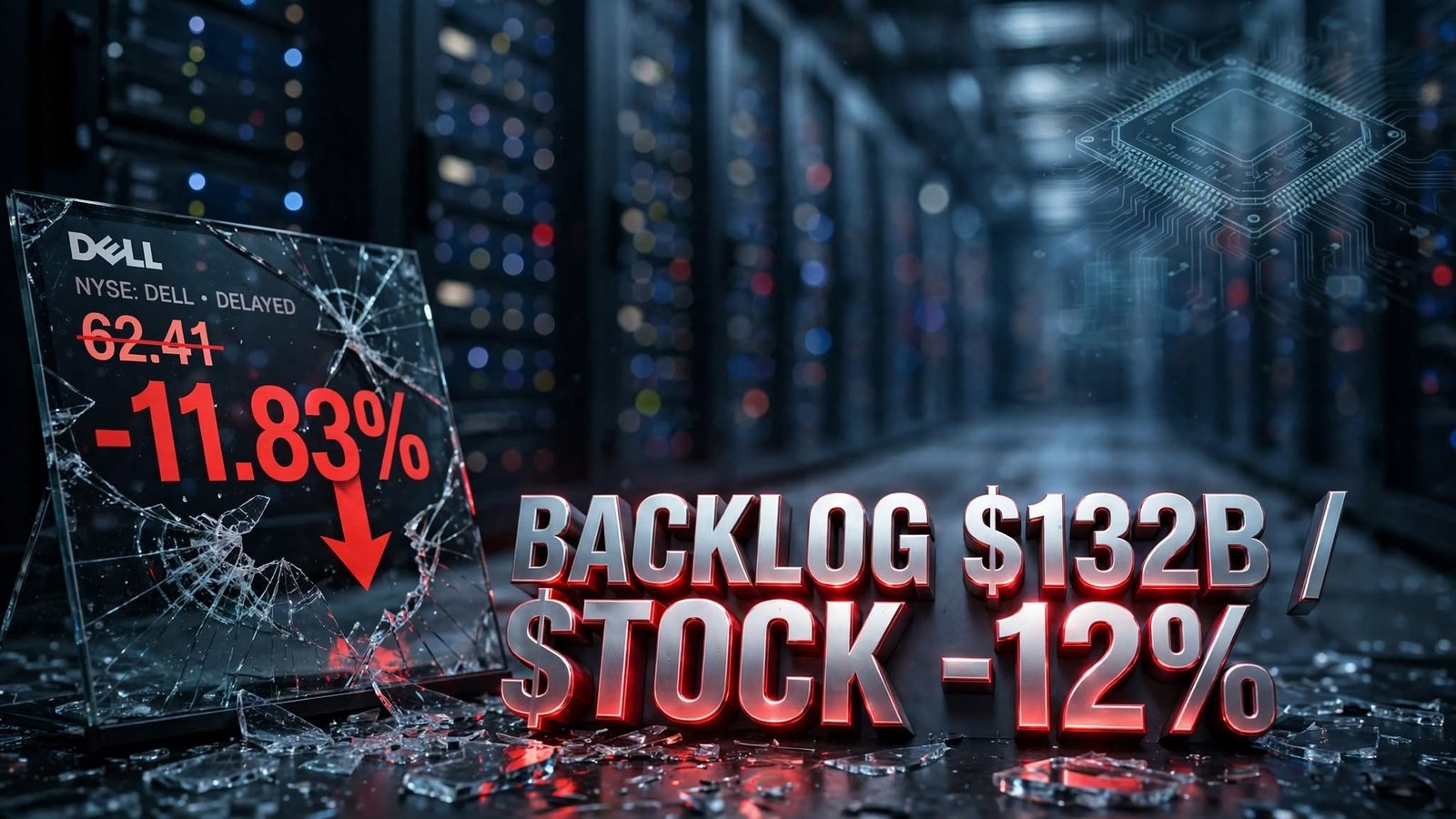
Dell Technologies delivered a genuinely extraordinary quarter—adjusted EPS of $9.45 versus $6.60 consensus, revenue of $54.94 billion versus $49.32 billion expected—and the stock still fell 12%. The culprit was margin guidance. Dell’s CFO signaled that Infrastructure Solutions Group operating margins would step down to roughly 14.8% in the January quarter from 17.0% in the October quarter. In a market already questioning the profitability of AI infrastructure spending, that guidance was enough to override a massive earnings beat.
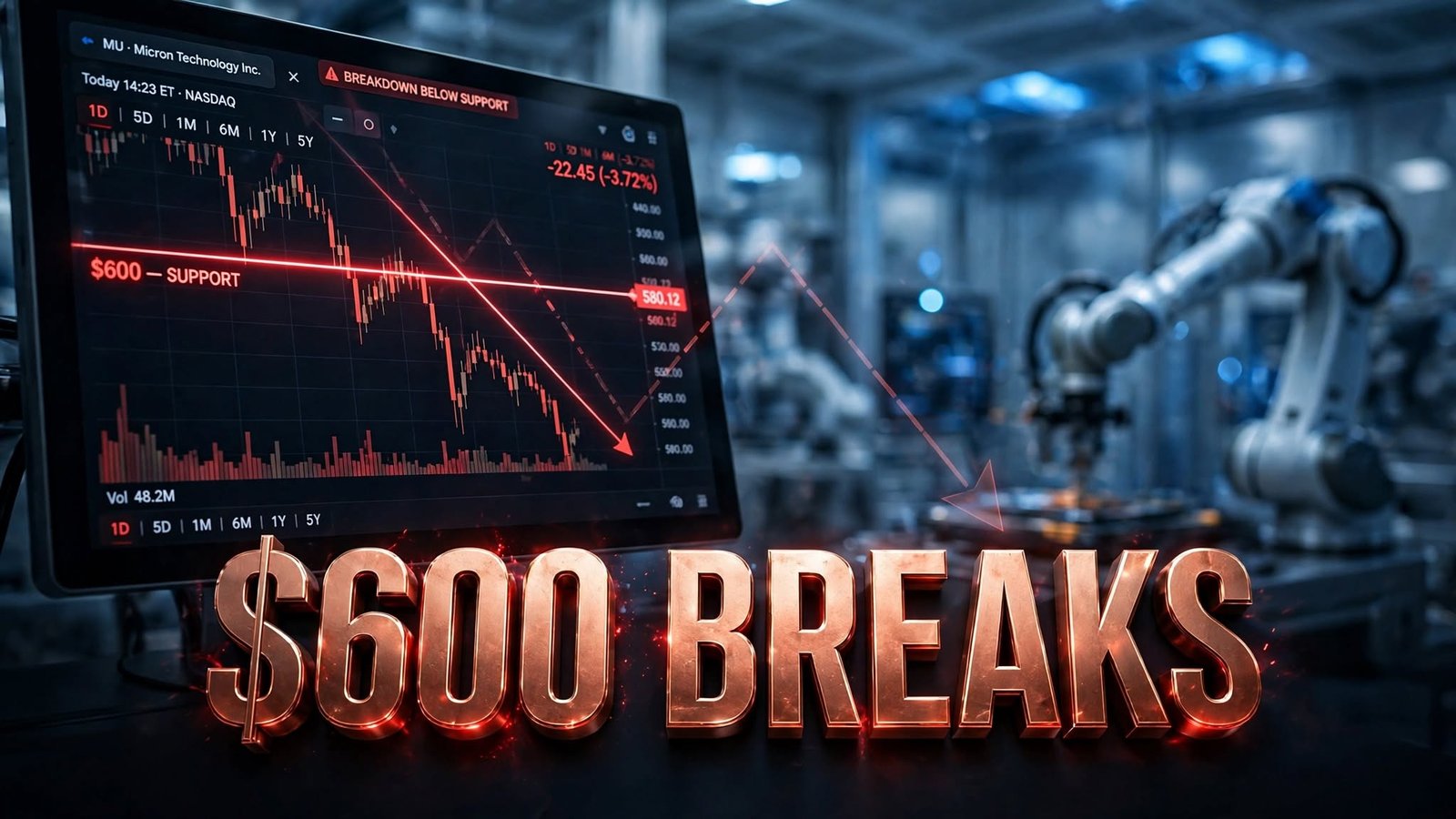
Micron breached the $600 psychological level in premarket trading on November 25, touching $594 before recovering slightly. The memory cycle peak anxiety is real, but the macro backdrop matters: if rates stay higher, the discount rate applied to cyclical hardware earnings stays higher too. A break of $600 on heavy volume could open the door to the $450–$500 range that served as consolidation support earlier in the year.
The common thread is not that these companies are failing operationally. Dell’s numbers were exceptional. Nvidia’s AI demand remains robust. Micron’s HBM pipeline is real. The common thread is that the market is no longer willing to pay any price for that growth when the discount rate is uncertain and the Fed’s next move is a coin flip.
BS Maurya Research Verdict
The Core PCE inflation October 2026 report is not a catastrophe. A 3.3% core rate is elevated, but it is not 2022. The monthly pace of 0.3% is consistent with gradual cooling, not an inflationary spiral.
What makes this report consequential is its timing and its direction. It arrived at a moment when the market was already questioning the durability of the AI capital expenditure cycle and the profitability of the companies building that infrastructure. It accelerates the annual core rate at precisely the moment when the Fed needs to see deceleration. And it lands two weeks before a policy meeting where the committee will have to decide whether to acknowledge that the last mile of disinflation is harder than previously assumed.
For retail investors, the practical takeaway is not to panic-sell AI exposure. It is to recognize that the easy-money tailwind that lifted nearly every growth stock in 2026 is no longer reliable. Position sizing matters more than directional conviction right now. If core PCE continues to accelerate into the first quarter, the Fed will have no choice but to keep rates restrictive, and that is a headwind for valuations across the AI complex—Nvidia, Dell, and Micron included. Watch the November core PCE print in late December. If it comes in at 0.3% or below on a monthly basis, the Fed retains optionality. If it prints 0.4% or higher, the December meeting becomes genuinely difficult.
FAQ
1. What was the Core PCE inflation October 2026 reading?
Core PCE rose 3.3% year-over-year in October 2026, up from 3.1% in September and above the 3.2% consensus forecast. On a monthly basis, core prices increased 0.3%, matching expectations.
2. Why does Core PCE matter more than CPI for the Fed?
The Federal Reserve explicitly uses core PCE as its preferred inflation gauge because it captures a broader basket of consumer spending and adjusts for substitution effects. CPI is more widely reported, but PCE is what the FOMC actually references in its policy statements.
3. Did the report increase the odds of a Fed rate hike?
It increased the odds that the Fed holds rates at restrictive levels for longer, rather than cutting. A outright hike remains unlikely, but the market has reduced the probability of near-term easing following the acceleration in annual core inflation.
4. How did stocks react to the Core PCE inflation October 2026 data?
The reaction was muted at the index level compared to the violent moves in individual AI names earlier in the week. Treasury yields rose modestly and the dollar firmed. The report reinforced, rather than created, the selling pressure in Nvidia, Dell, and Micron.
5. When is the next Core PCE inflation release?
The November 2026 PCE data is scheduled for release in late December 2026. That print will be the final major inflation reading before the Fed’s January 2027 policy meeting.