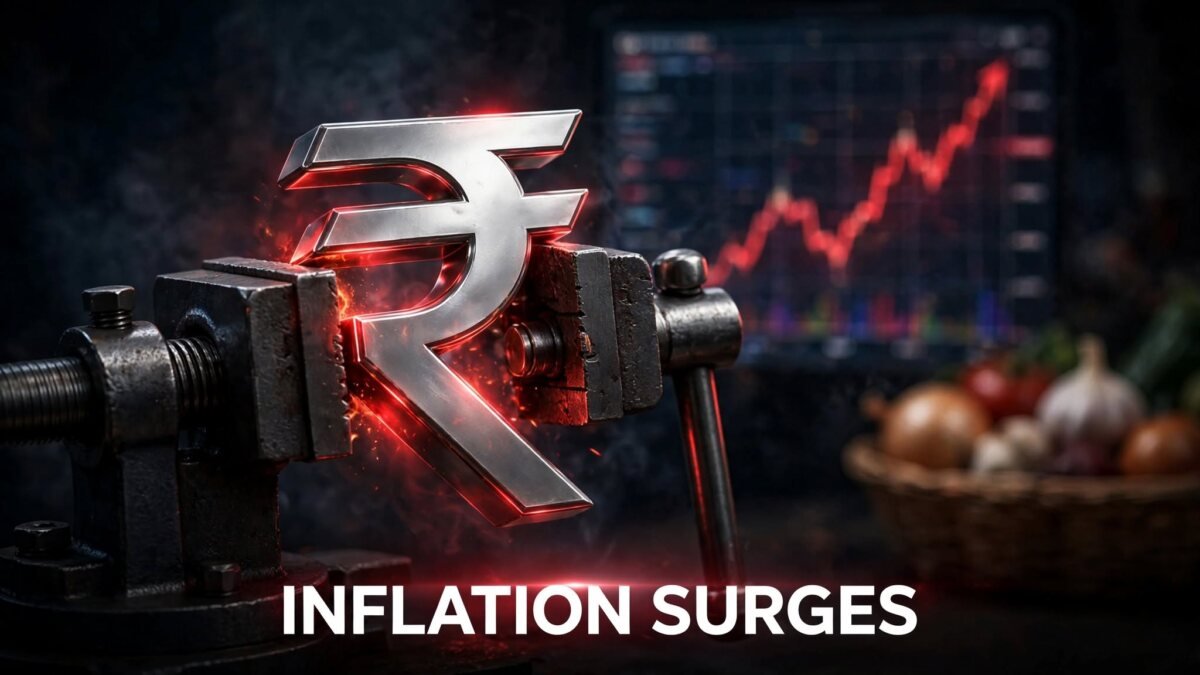
For the first time in two years, India’s retail inflation has breached the Reserve Bank of India’s (RBI) upper tolerance limit. And the market is already reacting.
According to data released by the Ministry of Statistics and Programme Implementation (MoSPI), the Consumer Price Index (CPI) based retail inflation surged to 6.09% in October 2026. This is a significant jump from 5.54% in September and is well above the RBI’s target range of 2% to 6%.
The primary culprit? Food inflation. It spiked to a staggering 8.94% in October, up from 7.74% in the previous month. The deficient and uneven monsoon has hit vegetable and cereal crops hard, driving up prices across the board. Onion prices alone surged 116.22% year-on-year, while garlic rose 60.74%.
The Immediate Market Impact: Rate-Sensitive Stocks Bleed
When inflation rises, the first sector to feel the pain is the rate-sensitive ones.
On November 13, as the inflation data hit the wires, the Nifty Auto index fell 1.17%, the Nifty Bank index slipped 0.91%, and the Nifty Realty index declined 0.81%. Banks like HDFC Bank and IndusInd Bank dropped over 1%, while auto stocks like Ashok Leyland and M&M followed suit.
Why? Because high inflation forces the RBI to keep interest rates high—or even raise them. Higher interest rates make borrowing expensive for both businesses and consumers. If home loans and car loans become costlier, demand slows down.
The Big Question: Will RBI Hike Rates in December?
The RBI’s Monetary Policy Committee (MPC) is scheduled to meet on December 2-4, 2026. The market is now pricing in a high probability of another rate hike.
Important context: The RBI had already raised the repo rate by 25 basis points in October 2026, taking it to 5.50%—its first rate increase in nearly four years. The December meeting would be the second hike in this tightening cycle, not the first.
Economists are already adjusting their forecasts:
Crisil expects another 25 basis point hike in December, retaining a tightening bias.
Emkay Global forecasts 75 basis points of total hikes in this cycle, with 25 bps each in December 2026 and February 2027.
Business Standard reports that economists expect the repo rate to reach 6% by February through back-to-back hikes.
The logic is simple: the RBI cannot afford to let inflation run rampant. Even though crude oil prices have cooled recently, food inflation is sticky and directly affects the common man.
What This Means for Your Money
1. Your Home Loan EMI is Not Coming Down
If you were waiting for the RBI to cut rates before refinancing your home loan, that hope is now dashed. The era of cheap money is not returning anytime soon. If you have a floating-rate loan, your EMI will remain elevated—and could rise further if the December hike materializes.
2. Fixed Deposits (FDs) Look Attractive Again
Banks will likely raise FD rates to attract deposits as they anticipate tighter liquidity. If you are a conservative saver, locking in a high FD rate now might be a smart move.
3. Be Cautious with Auto and Realty Stocks
These sectors thrive on low interest rates. With inflation high, the near-term outlook for auto and real estate stocks is challenging. Investors should wait for a clearer picture before adding these to their portfolios.
The Silver Lining: Crude Oil and the Rupee
There is one factor that could prevent a full-blown crisis: crude oil prices. Brent crude had briefly slipped below $90 per barrel in early November—its lowest since August—before rebounding to around $92-93. If oil stays relatively low, it will help cool inflation in the coming months.
Additionally, the rupee has strengthened to approximately 94.05 against the dollar, supported by foreign fund inflows and softer crude prices. A stronger rupee makes imports cheaper, providing some relief on the inflation front.
If these trends continue, the RBI might hike rates just once in December and then pause—but that is not the base case among economists.
BS Maurya Research Verdict
The 6.09% inflation print is a wake-up call for the Indian economy. It signals that the fight against inflation is far from over, and the RBI has already begun tightening. For investors, this is a time for caution, not aggression.
Do not panic-sell your banking stocks, but do not aggressively buy them either. The market will remain volatile until the December RBI policy is announced. For borrowers, the best strategy is to focus on prepaying high-interest debt and avoid taking on new, expensive loans.
FAQ
Q1: Why did India’s retail inflation rise to 6.09%?
The primary driver was food inflation, which spiked to 8.94% due to a deficient and uneven monsoon affecting crop yields, particularly vegetables and cereals. Onion prices alone rose 116% year-on-year.
Q2: What is the RBI’s inflation tolerance limit?
The RBI is mandated to keep retail inflation within a range of 2% to 6%. The October print of 6.09% breached the upper limit for the first time in two years.
Q3: Will the RBI increase interest rates in December?
Economists and market analysts largely expect the RBI to hike the repo rate by 25 basis points at its December 2-4 meeting to combat rising inflation. The RBI had already raised rates by 25 bps in October to 5.50%.
Q4: How does inflation affect my home loan?
If the RBI hikes rates, banks typically pass on the cost to borrowers. If you have a floating-rate home loan, your EMI will likely increase or your loan tenure will be extended.
Q5: When is the next RBI policy meeting?
The MPC is scheduled to meet on December 2, 3, and 4, 2026