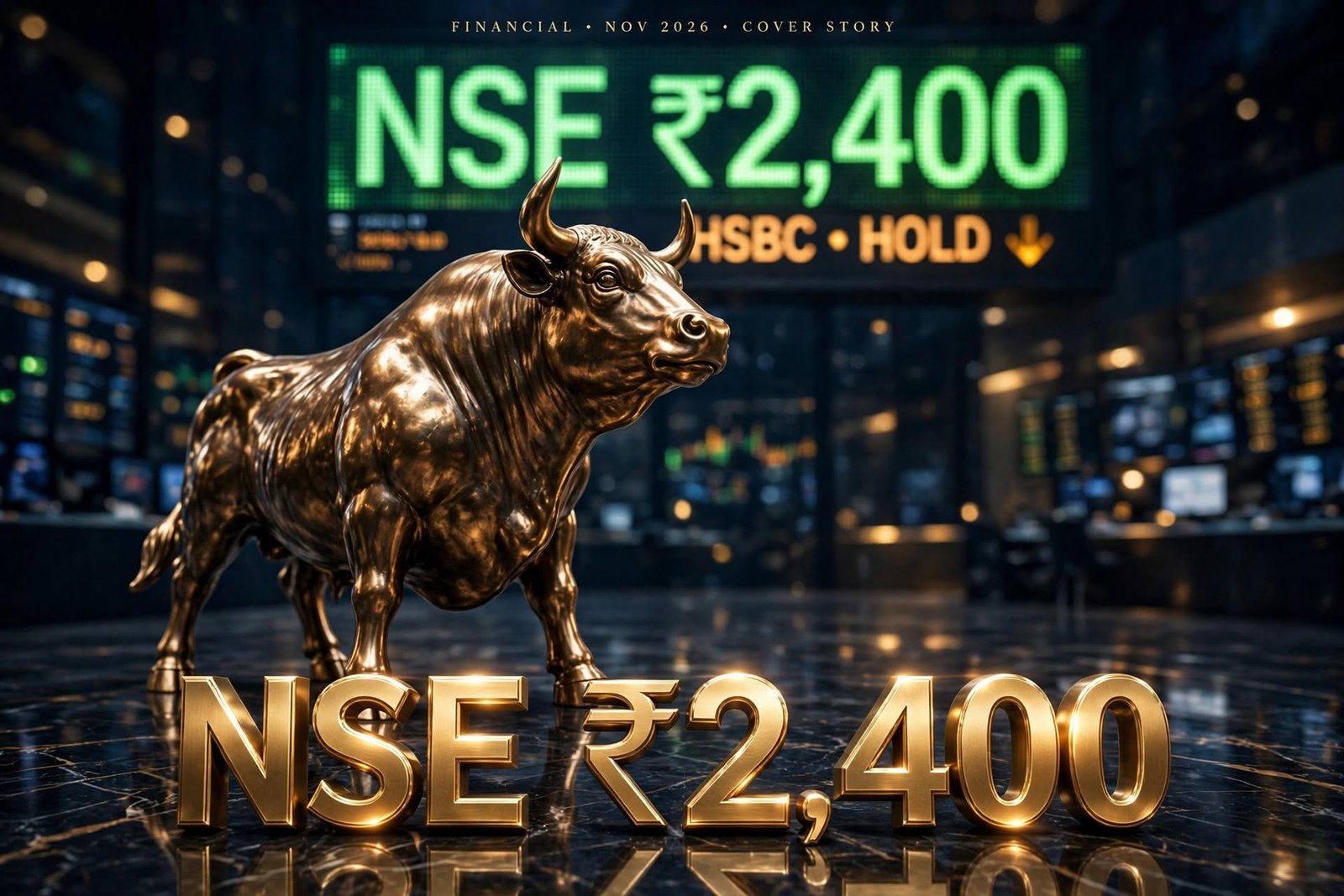
NSE share price surged to an all-time high of ₹2,400 on Thursday, pushing the National Stock Exchange of India’s market capitalisation to approximately ₹5.89 lakh crore and cementing its position as the world’s third-largest listed exchange operator by market value. The rally came even as HSBC initiated coverage on the stock with a “Hold” rating and a price target of ₹2,300—the first neutral call among 17 analysts tracking the exchange.
Why HSBC’s “Hold” Call Matters for NSE Share Price
HSBC’s decision to break from the consensus is significant. Until Thursday, every single one of the 17 analysts covering NSE had a “Buy” rating on the stock. HSBC acknowledged the exchange’s dominant franchise and superior technology infrastructure, but argued that these strengths are already fully reflected in the current valuation.
The brokerage’s caution contrasts sharply with ICICI Securities, which initiated coverage a day earlier with a “Buy” rating and a ₹2,650 target price, implying roughly 20% upside from its reference price. ICICI Securities called NSE a “prime play on Indian growth and financialisation,” projecting profit after tax to reach ₹164 billion by FY29, up from ₹103 billion in FY26.
The Valuation Debate: Growth vs. Perfection
The divergence between HSBC and ICICI Securities captures the central tension in the NSE share price story. ICICI Securities values the exchange at 40 times estimated FY29 earnings per share of ₹66.30, a premium multiple justified by NSE’s market leadership and emerging growth avenues including commodity derivatives and GIFT City operations.
HSBC’s more conservative stance suggests that at current levels, the risk-reward is balanced. The stock has already rebounded nearly 46% from its October low of ₹1,640 and trades approximately 34% above its IPO price of ₹1,785. For value-conscious investors, the question is whether NSE’s growth trajectory can sustain the premium embedded in the NSE share price.
| Analyst | Rating | Target Price | Key Rationale |
|---|---|---|---|
| HSBC | Hold | ₹2,300 | Valuation fully reflects franchise strengths |
| ICICI Securities | Buy | ₹2,650 | Multi-decade growth story; FY29 PAT ₹164 bn |
| Consensus (16 others) | Buy | Above ₹2,400 | Market dominance, derivatives leadership |
NSE’s Dominance Is Undeniable—But Priced In?
The numbers behind NSE’s franchise are staggering. In FY26, the exchange commanded a 92.99% share of cash-market turnover and 74.71% of equity options premium turnover in India. Globally, it accounted for 51.18% of contracts traded in equity derivatives. These are not marginal advantages; they are near-monopoly positions.
Yet HSBC’s argument is not that NSE is a weak business. It is that the NSE share price already embeds years of flawless execution. For retail investors evaluating this stock through Investing & Stocks, the key question is whether the current multiple leaves room for disappointment.
What Retail Investors Should Watch
Three catalysts could shift the NSE share price trajectory in either direction. First, regulatory developments—SEBI’s oversight of derivatives markets remains a live risk, as ICICI Securities explicitly flagged. Second, trading volume trends—any slowdown in retail participation or options activity would directly impact transaction revenue. Third, global peer valuations—if Deutsche Boerse or London Stock Exchange re-rate lower, NSE’s premium becomes harder to justify.
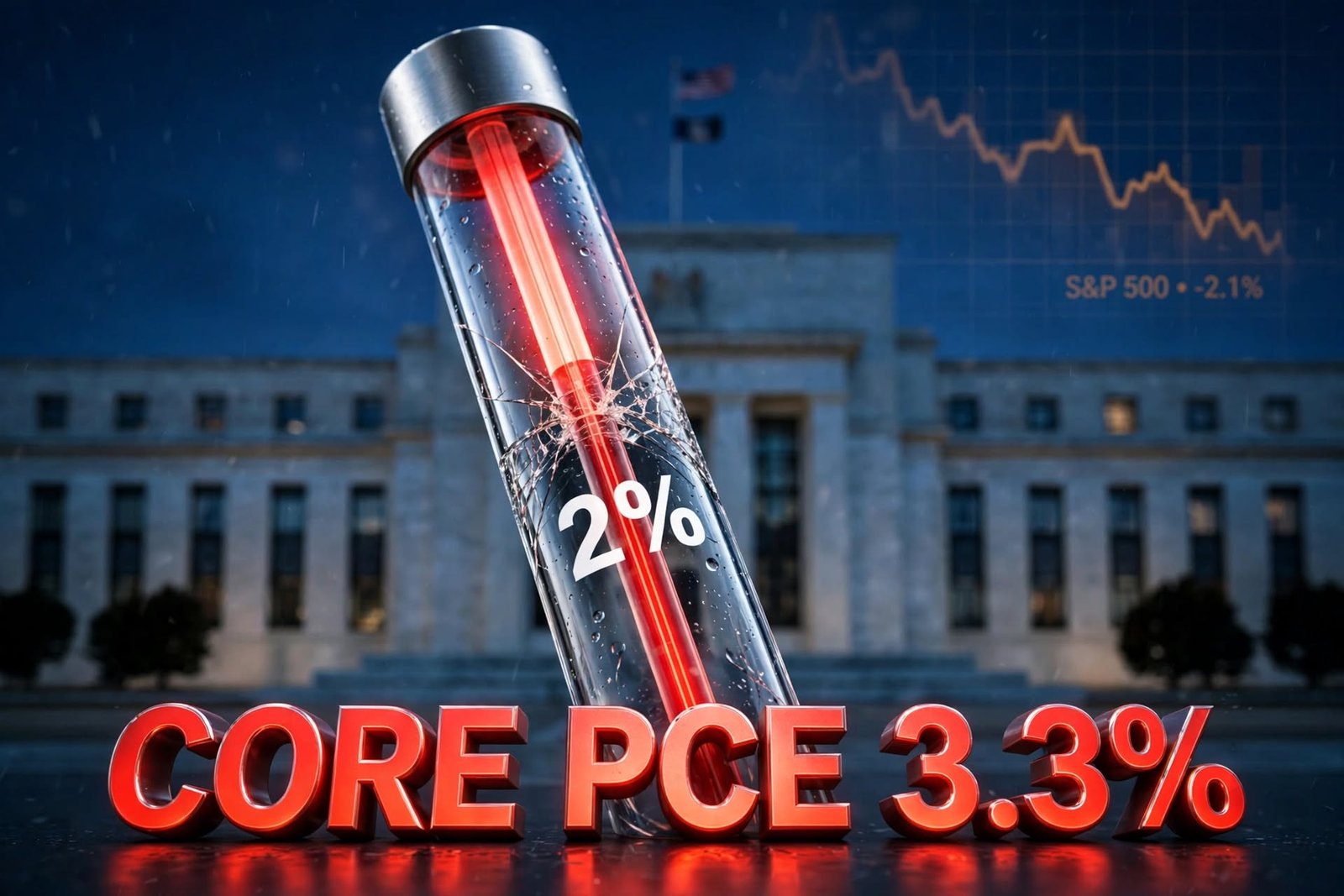
The October PCE data released this week, showing core inflation at 3.3% year-over-year, also matters indirectly. Persistent US inflation keeps global rate expectations elevated, which can pressure equity valuations across emerging markets, including India.
BS Maurya Research Verdict
NSE is a high-quality monopoly-like franchise trading at a premium valuation. For long-term investors, the exchange’s structural growth story—India’s financialisation, rising retail participation, and derivatives expansion—remains intact. However, HSBC’s “Hold” call is a timely reminder that even the best businesses can be poor investments at the wrong price. Retail investors should consider accumulating on meaningful pullbacks rather than chasing the NSE share price at record highs. Position sizing matters more than timing here.
Frequently Asked Questions
1. What is the current NSE share price?
NSE shares hit a record high of ₹2,400 on November 26, 2026. The stock has since traded near that level, with a market capitalisation approaching ₹6 lakh crore.
2. Why did HSBC give a “Hold” rating to NSE?
HSBC believes NSE’s dominant market position and growth prospects are already fully reflected in the current valuation. Its ₹2,300 target implies limited upside from the record high.
3. What is the highest analyst target price for NSE?
ICICI Securities has the highest target at ₹2,650, implying approximately 20% upside from its reference price of ₹2,209. The brokerage projects FY29 profit of ₹164 billion.
4. Is NSE the world’s third-largest exchange operator?
Yes. With a market capitalisation near ₹5.89 lakh crore (approximately $64 billion), NSE has surpassed Deutsche Boerse and London Stock Exchange to rank third globally among listed exchange operators.
5. What risks could impact the NSE share price?
Key risks include regulatory changes from SEBI affecting derivatives trading, a slowdown in retail trading volumes, cybersecurity threats, and global valuation de-rating of exchange operators.