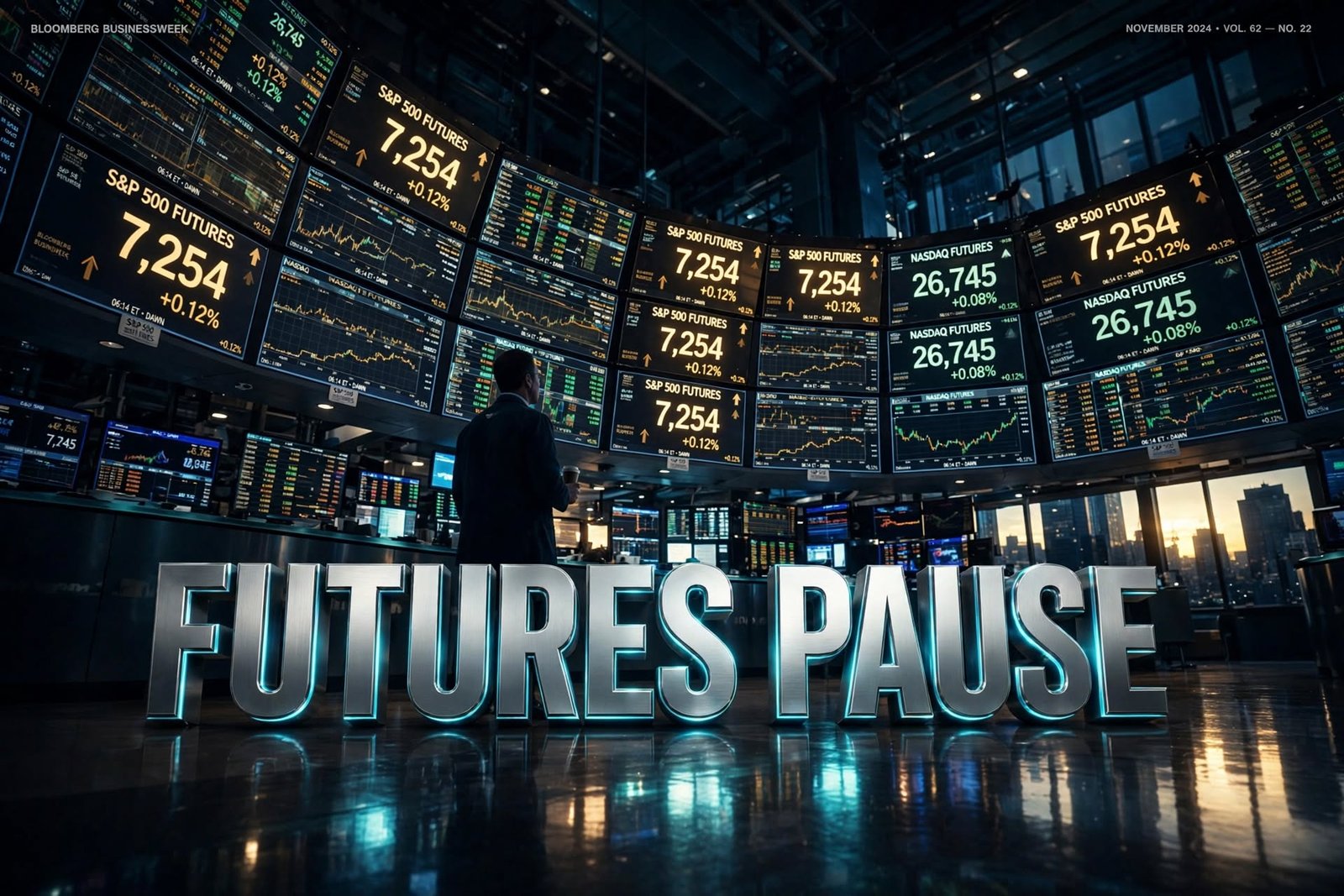
S&P 500 Nasdaq futures flatlined early Tuesday, with S&P 500 futures hovering near recent levels and Nasdaq 100 futures slipping modestly, a day after the Nasdaq Composite staged its most violent single-day rebound in years. The pause is not a sign of weakness—it is a collective inhale. Wall Street just witnessed Nvidia surge 31.5%, its biggest one-day gain in 23 years, dragging the entire AI complex back from the brink of a bear market. Now, traders are asking the only question that matters: was Monday a genuine turning point, or a dead-cat bounce inside a deepening correction?
The Monday Miracle That Reset the Narrative
The numbers from Monday’s session are almost hard to process. The Nasdaq Composite rocketed 6.51% to 24,089.56, the S&P 500 jumped 4.73% to 7,237.17, and the Dow added roughly 1,472 points. Nvidia alone accounted for a staggering share of that move, closing up 31.48% as CEO Jensen Huang’s return to the helm restored confidence in the AI trade. The Philadelphia Semiconductor Index surged 14.03%, with SK Hynix up nearly 20% and Micron up 19%.
The trigger was simple: the most important figure in artificial intelligence reasserted control of the most important company in the ecosystem. But concerns about AI spending and moderating earnings growth have not disappeared. That caution is precisely why S&P 500 Nasdaq futures are hesitating. The rally was emotional, not fundamental. No new earnings data, no Federal Reserve pivot, and no resolution to the questions that caused the selloff in the first place.
What Caused the Crash That Preceded the Rebound
To understand why futures are stalling, you have to remember what the market looked like last week. The Nasdaq had fallen over 5% in a single week, entering correction territory and approaching bear market levels. The S&P 500 was down more than 10% from its record high of 7,818.93 set in October. Nvidia itself had suffered seven consecutive weekly declines, its longest losing streak since 2008, shedding roughly $2.6 trillion in market capitalization—comparable to the entire value of a mega-cap technology company.
The root cause was not a sudden deterioration in corporate profits. It was a crisis of confidence in the AI capital expenditure cycle. Investors began questioning whether the hundreds of billions being poured into data centers and chips would ever generate returns commensurate with the valuations. The technology cycle may be shifting from the “picks and shovels” phase—where infrastructure builders like Nvidia captured the bulk of the value—to a phase where doubts about spending efficiency dominate.
Monday’s rally did not answer those doubts. It temporarily silenced them.
The Data That Matters Now
| Metric | Monday’s Close | Context |
|---|---|---|
| S&P 500 | 7,237.17 (+4.73%) | Down from October record of 7,818.93 |
| Nasdaq Composite | 24,089.56 (+6.51%) | Entered correction last week; now recovering |
| Nvidia | +31.48% | Longest weekly losing streak since 2008 snapped |
| Philadelphia Semiconductor Index | +14.03% | SK Hynix +~20%, Micron +~19% |
Source: Xinhua, MarketWatch, EFE, Yicai, MarketScreener
Why the S&P 500 Nasdaq Futures Pause Is Rational
The bull case rests on the idea that a violent single-day bounce after a sharp correction often signals a near-term bottom. The bear case is equally coherent: concentration risk in a handful of AI-linked names means that if profit estimates at just a few companies are cut, the index’s entire outlook needs rewriting. That concentration risk is why S&P 500 Nasdaq futures are not chasing Monday’s rally with abandon.
The immediate catalyst traders are watching is Wednesday’s Personal Consumption Expenditures price index, the Federal Reserve’s preferred inflation gauge. With expectations of tighter Fed policy already lifting Treasury yields and supporting the dollar, a hot PCE print would revive the rate-hike narrative that helped trigger the selloff in the first place. A cool print would give the rally room to breathe.
The Rotation Trade Nobody Is Talking About
While the headlines focus on Nvidia, a quieter shift is underway beneath the surface. Software companies—those monetizing AI rather than selling the tools to build it—could benefit as hyperscalers dial back spending growth. If spending growth slows, cash flow rebuilds, buybacks resume, and investors may start rewarding discipline over scale.
This matters for retail investors holding broad technology exposure. The S&P 500 Nasdaq futures pause may be less about Nvidia fatigue and more about positioning for a leadership rotation. The companies that led the market out of the 2023–2025 AI boom may not be the ones that lead the next leg.
BS Maurya Research Verdict
Treat Monday’s rally as a relief bounce, not an all-clear signal. The S&P 500 Nasdaq futures are telling you what the cash market could not: that a single day of Nvidia-driven euphoria does not resolve the structural questions about AI spending, earnings concentration, and Federal Reserve policy. The correction that began in early November was triggered by legitimate concerns, and those concerns have not been retired.
For long-term investors, the valuation reset is genuinely constructive. But the path from here to sustainable recovery runs through Wednesday’s PCE data and the next round of hyperscaler earnings guidance. Do not add aggressive new positions based on Monday’s close. If you are dollar-cost averaging, continue. If you were waiting for a signal, wait for the PCE print and the market’s reaction to it. The difference between a healthy reset and a bear market is often determined in the weeks after the first violent bounce, not during it.
Frequently Asked Questions
1. Why are S&P 500 and Nasdaq futures flat after Monday’s huge rally?
Futures are flat because traders are waiting for confirmation that Monday’s Nvidia-led rebound is sustainable. The rally was driven by sentiment—Huang’s reinstatement—rather than new economic data, and key risks including AI spending concerns and Federal Reserve policy uncertainty remain unresolved.
2. What caused the Nasdaq to surge 6.5% on Monday?
Nvidia CEO Jensen Huang’s reinstatement by the board sparked a massive rally in AI-related stocks. Nvidia rose 31.5%, its biggest one-day gain in 23 years, and the Philadelphia Semiconductor Index jumped 14%, pulling the entire tech sector higher.
3. What is the next catalyst for S&P 500 and Nasdaq futures?
The Personal Consumption Expenditures (PCE) price index, due Wednesday, is the immediate catalyst. As the Federal Reserve’s preferred inflation measure, a hot reading could revive rate-hike fears and pressure futures, while a cool reading could extend the rally.
4. Is the AI trade dead or just resetting?
Most analysts view this as a reset rather than a death. Valuations have compressed meaningfully after the correction, and if 2027 profit estimates hold, long-term investors may find attractive entry points. However, leadership could rotate from hardware to software.
5. Should I buy stocks now or wait?
If you are a long-term systematic investor, continue your SIP or dollar-cost averaging. If you are making discretionary purchases, wait for the PCE data and the market’s reaction. The first bounce after a correction is often volatile, and confirmation of a durable bottom takes weeks, not days.